


Welcome to the TechRadar best VPN buying guide. Our aim is to give you the information to buy the best VPN for your needs as quickly as possible.
With that in mind, NordVPN is the best VPN for most people and we’ll explain why just below. Surfshark and ExpressVPN are also excellent. You’re unlikely to go wrong with any of them. We know this because we regularly perform in-depth and rigorous VPN testing which you can also read about further down.
We’ve been writing about and reviewing VPNs at TechRadar for over 11 years and we know more about them than any other website. When it comes to guiding our readers to the right choice, we think that’s worth something.
5 best VPNs: a quick overview
In the latest update, we’ve checked the prices and VPN product details for accuracy. We also updated the entry for PrivadoVPN after it was recently re-tested.
The best VPN services 2025
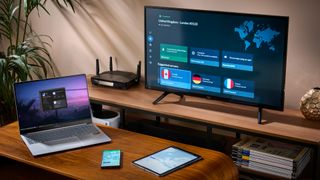



NordVPN is more than enough for most people: it’s fast, cheap, and relatively easy to use – but with plenty of tools for even the biggest technophiles. There are some niche cases where you may be better off with another service (ExpressVPN is a better choice for countries with extreme censorship, for example).
But if you just want a VPN for streaming your favorite shows, gaming, and keeping safe on public WiFi, NordVPN is the best VPN for the job – and there are some big NordVPN discounts right now, in celebration of the company’s 13th birthday.
READ MORE ABOUT NORDVPN ▼
Ease of Use ★★★★
Why you can trust TechRadar
We spend hours testing every product or service we review, so you can be sure you’re buying the best. Find out more about how we test.
Getting started with NordVPN is easy thanks to the onboarding wizard that springs to life when you fire up the Mac or Windows version for the very first time. It’ll walk you through Nord’s features and make sure you understand what’s going on.
So, why just four stars for ease of use? NordVPN has users well covered for apps but the browser extension isn’t great. There’s also no GUI for the Linux version which is a bit disappointing. Lastly, Surfshark and ExpressVPN are just a little bit more obvious when it comes to basic use. Unless you’re a Linux user, or you’re all about browser extensions, though, you shouldn’t let that put you off.
Read more details on NordVPN apps.
Streaming ★★★★★
We rate NordVPN as the best streaming VPN that money can buy. All of its servers are optimised for streaming and it unblocks all major streaming services – including international Netflix libraries, Amazon Prime Video and Disney Plus – as well as a host of other other regional streamers such as BBC iPlayer, 9Now, SBS On Demand, ITVX, Sling, FuboTV, Max and many, many more. In fact, it’s not often we find a streaming service that NordVPN can’t get round the back of.
Speeds are easily enough to handle 4K HDR video. The only streaming-related caveat is that NordVPN isn’t the best torrenting VPN. That accolade goes to ExpressVPN. That’s because there are only a handful of NordVPN servers optimised for P2P use.
Read more details on NordVPN unblocking.
Privacy & Security ★★★★★
NordVPN comes with cutting-edge security and privacy features, including its recently launched NordWhisper protocol for specific for VPN obfuscation and censorship avoidance. It also runs both OpenVPN and its own proprietary WireGuard-based Nordlynx protocol with super-secure, zero-trust AES-256 encryption, meaning you can be confident that nobody has access to your data but you.
If someone ever did manage to pilfer it, it would take them millions of years to crack the encryption, particularly as NordVPN’s quantum-safe encryption is theoretically future-proofed.
The company has a strict no-logs policy – which has just been successfully audited for the fifth time – meaning that not even NordVPN itself has a record of your browsing data. There’s a kill switch for further assurances and DNS leak protection to prevent your ISP from getting even a whiff of what you’re up to.
Read more details on NordVPN privacy and security.
Speed & Performance ★★★★½
The NordLynx proprietary protocol performed brilliantly in our speed tests. It clocked consistent speeds upwards of 950 Mbps in servers to the UK as well as when heading across the Atlantic to the US. The latter of these is where many other VPNs struggle to perform. That’s worth considering given that plenty of people will be looking to access streaming services and other content across The Pond.
OpenVPN speeds are much slower, as with all VPNs. It’s only Surfshark that stands out in this area but, again, it shouldn’t put you off unless you insist on using OpenVPN over NordLynx.
Read more details on NordVPN speed and performance.
NordVPN price plan comparison
There are four NordVPN price plans to choose from if you’re based in the US – three if you live anywhere else in the world. NordVPN Basic is just the VPN software. It’s available everywhere. If you want to add some anti-virus functionality (Nord Threat Protection Pro), then go for NordVPN Plus. For a password manager (NordPass), cloud storage (NordLocker), and up to $5000 of cyber insurance on top, go for NordVPN Ultimate.
NordVPN recently launched a different pricing structure in the US with the arrival of its NordProtect program which includes up to $1M in identity theft insurance and $100K in cyber extortion insurance. There’s confidence for you!
So, instead of the Plus and Ultimate tiers, the USA gets Basic, Plus, Complete, and Prime.
For our money, the Basic plan is the best value but if you really need the extras on offer in Plus, Complete, Ultimate, or Prime, then go for it. Each plan type comes with a different possible contract length: 1-month, 1-year, or 2-year. The best value is by a long shot is the 2-year plan. Do remember that you need to pay the full amount upfront and that, whichever you choose, you get 30 days to change your mind and ask for a full refund.
Here’s a comparison table of the NordVPN plans and what each one offers. Just be careful not to fall for a fake NordVPN ad scam when you come to buy:
| Header Cell – Column 0 |
NordVPN Basic |
NordVPN Plus |
NordVPN Complete (US-only) |
NordVPN Ultimate (non-US) |
NordVPN Prime (US-only) |
|---|---|---|---|---|---|
|
1-month plan price |
$12.99/month |
$13.99/month |
$14.99/month |
£12.79/month |
$17.99/month |
|
1-year plan price |
$4.99/month |
$5.99/month |
$6.99/month |
£6.49/month |
$9.99/month |
|
2-year plan price |
$3.39/month |
$4.39/month |
$5.39/month |
£5.29/month |
$8.39/month |
|
VPN |
✅ |
✅ |
✅ |
✅ |
✅ |
|
Threat protection |
❌ |
✅ |
✅ |
✅ |
✅ |
|
Password manager |
❌ |
✅ |
✅ |
✅ |
✅ |
|
1TB cloud storage |
❌ |
❌ |
✅ |
✅ |
✅ |
|
Cyber Insurance |
❌ |
❌ |
❌ |
✅ |
✅ (NordProtect) |
Surfshark – the best low cost VPN
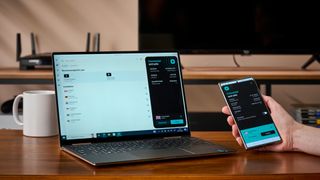
For a straight-up VPN with all the basics of privacy, security, and streaming included, Surfshark really is excellent value. It costs less than NordVPN, it’s half the price of ExpressVPN and there are no limits to the number of devices you can install it on with just a single, simple account.
Surfshark has some brilliant web browsing anonymity features that every casual user will love. You should be rightly tempted to choose it over NordVPN even though it loses out to the top dog on usability, connection consistency, and security but only by a shade.
READ MORE ABOUT SURFSHARK ▼
Ease of Use ★★★★
Surfshark has an app for pretty much every platform and is one of the few to have a proper GUI for Linux. It’s got you covered for routers, browsers, Fire Stick, and Apple TV, as well as all the regulars.
It’s pretty straightforward to use – we love the QR code log-in for your secondary devices – but, with the location guide and quick access feature buttons all competing for screen real estate, there’s a fair bit going on at a glance. That makes the interface a little tougher on the eye than NordVPN or ExpressVPN but not so much that it should put off any beginners.
If you do need help, the built-in AI chatbot will spit out some solid how-to type articles and there aren’t many layers between you and a real, live customer support operative if that doesn’t do the trick.
Read more details on Surshark’s ease of use.
Streaming ★★★★½
Surfshark is good for streaming. It had no problems unblocking all the major streaming services in all kinds of geos, and, with 140 server locations across 100 countries, you won’t be short of options of places to pretend to be.
All of Surfshark’s servers are optimized for streaming and torrenting but we did have a couple of issues of jitter which meant that video streams dropped out once or twice in our tests. Obviously, just reconnect the VPN and press play again should that occur.
A problem, you say? Well, maybe but balance that against Surfshark’s unlimited connections policy. That’s right, you can use Surfshark on as many devices as you like simultaneously, all from just one account!
Read more details on Surfshark’s unblocking and content.
Privacy & Security ★★★★½
Surfshark’s AES-256 encryption tech puts it at the top table for security. Its CleanWeb browser add-on blocks ads from appearing on websites and denies cookie requests without you having to bother which we really, really like.
It also has a rather wonderful Alternative ID tool that effectively creates a fake persona – complete with name, email address, and phone number – to autofill into online forms when you’d rather not give your real details. Emails, calls, and messages get forwarded to your real versions until you pull the plug.
Surfshark’s Camouflage Mode obfuscation technology helps you bypass VPN blocks by hiding the fact you’re using a VPN. Its No Borders feature, meanwhile, detects if your current network is facing any restrictions and automatically recommends servers that perform best under those restrictions. There’s no post-quantum protection future-proofing, like NordVPN or ExpressVPN, to prevent possible “store now, decrypt later” attacks but you can’t expect everything for a bargain price.
Read more details on Surshark privacy and security.
Speed & Performance ★★★★★
You want speed? You got speed. Surfshark is the No.1 fastest VPN, maxing out beyond 950 Mbps for local and trans-Atlantic servers. As we said above, though, it can be prone to jitter which might make you suffer during gaming and streaming. If you’re looking at pure up/download speeds, though, then Surfshark is hard to beat.
Read more details on Surfshark’s speed and performance.
Surfshark price plan comparison
The Surfshark Starter plan is where to go to keep costs at rock bottom. That’s your VPN use, including ad and cookie pop-up blockers, plus the Alternate ID personal detail mask and masked email generator.
But it’s very hard to turn down the upgrade to the Surfshark One plan given that it’s only about $13 more over 2 years and only about a $3 difference on the 12-month plan. That adds a built-in anti-virus, webcam protection, and real-time credit card, ID, and email breach alerts.
Surfshark’s premium plan, One+ is a tougher sell. It’s about double the price of Starter. That adds the Incogni data removal tool into the mix. It’s a decent service but it’s probably only worth opting for Surfshark One+ if you were considering Icogni anyway.
Here’s a comparison table of the Surfshark plans and what each one offers and a direct comparison of NordVPN vs Surfshark:
| Header Cell – Column 0 |
Surfshark Starter |
Surfshark One |
Surfshark One+ |
|---|---|---|---|
|
1-month plan price |
$15.45/month |
$17.95/month |
$20.65/month |
|
1-year plan price |
$3.19/month |
$3.39/month |
$6.09/month |
|
2-year plan price |
$2.19/month |
$2.69/month |
$4.29/month |
|
VPN |
✅ |
✅ |
✅ |
|
Ad blocker |
✅ |
✅ |
✅ |
|
Cookie pop-up blocker |
✅ |
✅ |
✅ |
|
Alternative ID |
✅ |
✅ |
✅ |
|
ID breach alerts |
❌ |
✅ |
✅ |
|
Antivirus |
❌ |
✅ |
✅ |
|
Incogni data removal |
❌ |
❌ |
✅ |
ExpressVPN – the best VPN for usability

Price is the main reason ExpressVPN sits behind NordVPN and Surfshark in our best VPN list. It costs a lot of money and there are no cheaper price plans to fit lower budgets. Regarding what you get, it’s more in line with the upper tiers of the two above, NordVPN Ultimate and Surfshark One+, but the lack of flexibility is frustrating.
What’s more, ExpressVPN had a few gaps in streaming during our most recent testing, and, while it’s the best VPN for beginners, neither of the others above are so complicated that they should put you off spending half as much on your VPN.
READ MORE ABOUT EXPRESSVPN ▼
Ease of Use ★★★★★
The ExpressVPN user interface is just great. There’s nothing glitzy about the look of its apps but there’s a simplicity that belies a lot of very clever design. It’s red when it’s off, it’s green when it’s on and the first two sections that draw your eyes are the massive Connect button and the server location option which opens up a list of countries either recommended or by continent. The casual user needs to go no further and get everything they need right there.
There are apps for every platform. ExpressVPN even has its own Aircove router if you want the VPN working at the heart of your home network. Only those on Linux should feel irked with just command line access to work with.
The other place your money goes is the 24/7 live chat in the help section of the app. Waiting times to get connected to human support can be as little as 30 seconds. We were never left hanging for more than 5 minutes in our tests. There is just no better VPN for usability.
Read more details on ExpressVPN’s ease of use.
Streaming ★★★★
With over 148 locations in 105 countries, ExpressVPN will have you covered for most of your streaming needs – certainly when accessing streaming services across the States, UK, and Europe. It has the most Oceania server locations in our top three although we did run into some trouble with Netflix and 10Play in Australia. Use the 24/7 live chat for advice on the best server choice if you find similar issues and that should sort it.
ExpressVPN is a bit short across the Middle East with just two countries to choose from. Not great for BeIn sports content in that part of the world, or watching Ronaldo in the Saudi Pro League or any other local content from Saudi, UAE, and the like.
In terms of stream stability, ExpressVPN does pretty well, although it does feel like NordVPN has the edge here with fewer instances of dropping out when viewing trans-Atlantic content – another reason why you might want to make a different choice if streaming is your no.1 VPN use case.
Read more details on ExpressVPN unblocking and content.
Privacy & Security ★★★★★
You might pay more – pretty much double the cost of all the other VPNs here – but you do get a lot of security features with ExpressVPN. You just need to decide whether you need them or not. These include the ExpressVPN Keys password manager, parental controls to stop access to adult sites, a tracker and malware threat manager, and one of the best built-in ad blockers on this list. The only disappointment is the fake website warning system which let far too many slip the net to really trust.
Fortunately, ExpressVPN gets the basics of security bang on. It uses top-end, rotating key, AES-256 encryption as well as a 1000-dimension secure ML-KEM key designed to future-proof your data for the quantum computing age too. We’re also big fans of the randomly allocating Shuffle IP system which ensures there’s no correlation between your identity and your online activity.
Combine that with the provider’s TrustedServer technology, and commitment to post-quantum encryption, and it’s full marks here. The company is so confident that it offers a $1 million bug bounty should you ever get inside an ExpressVPN server. Good luck!
Read more details on ExpressVPN privacy and security.
Speed & Performance ★★★★
Lightway is the name of ExpressVPN’s bespoke VPN protocol. It’s not quite as fast as NordLynx or WireGuard, as used by Surfshark, but it’s easily enough for the needs of the casual user. It’s optimized for mobile use – certainly no bad thing in the modern age – and outperforms OpenVPN by a long shot.
It’s slightly disappointing that Lightway’s 898 Mbps speeds dropped to more like 396 Mbps once we connected to the US from the UK but it’s worth remembering that you only need a fraction of that to stream 4K video.
Something to note is that ExpressVPN recently launched Lightway 2.0 which, while being unable to test currently, promises to streamline Lightway’s coding using Rust, allowing for more optimization, streamlining, and consequently, speed. Lightway in Rust has now launched on Aircove devices and is expected to land elsewhere over 2025.
Read more details on ExpressVPN speed and performance.
ExpressVPN price plan
There’s only one price plan for ExpressVPN which makes things a lot more straightforward. Granted, it’s a very expensive price plan but that’s because you get the kind of optional extras found in NordVPN and Surfshark’s top-tier packages included as standard.
Here’s a table showing ExpressVPN’s main features and a direct comparison of ExpressVPN vs NordVPN:
| Header Cell – Column 0 |
ExpressVPN 1 month |
ExpressVPN 1 year |
ExpressVPN 2 year |
|---|---|---|---|
|
Price |
$12.95/month |
$6.67/month |
$4.99/month |
|
VPN |
✅ |
✅ |
✅ |
|
Ad blocker |
✅ |
✅ |
✅ |
|
Tracker blocker |
✅ |
✅ |
✅ |
|
Password manager |
✅ |
✅ |
✅ |
|
ID Alerts |
US-only |
US-only |
US-only |
|
$1M ID theft insurance |
US-only |
US-only |
US-only |
|
Data Removal |
US-only |
US-only |
US-only |
Proton VPN – the best VPN for privacy

Proton VPN is one of many privacy-centric products built by Proton. It’s a CERN-scientist-founded, Swiss company committed to the “societal problem of surveillance capitalism” rather than a Silicon Valley venture capitalism get-rich-quick machine. So long as Proton sticks to that mission, that makes it quite an ethical VPN choice and one that works pretty much as well as all the others on this best VPN list.
The big reason to choose Proton VPN is if privacy is of paramount importance to you – or if you need a good range of server locations across Africa, the Middle East, and Asia.
There is a free version of Proton available but it’s Proton VPN Plus that we’re recommending in fourth.
READ MORE ABOUT PROTON VPN ▼
Ease of Use ★★★★
Proton VPN is easy enough to use but there are some slight irritations on a few platforms. There are apps available for pretty much all your devices – including Linux with a graphic interface – but the Chrome browser extension version isn’t quite as reliable as the VPNs higher up, and, given the popularity of both Chrome and browsing when it comes to VPN use, it’s quite the frustration. It’s also a bit of an annoyance that the split tunneling feature isn’t available on MacOS with Proton VPN either.
Proton VPN also loses marks in this category for customer service. Like the others in this list, the live chat isn’t 24/7. It’s only available during Swiss work hours – not great if you’re based on Pacific Time in the States or live in Australia or New Zealand.
Read more details on Proton VPN’s apps and ease of use.
Streaming ★★★★★
Proton VPN is a good choice for both streaming and torrenting. Port forwarding is available and there are dedicated, P2P-optimized servers, which is great for the latter.
Proton also has more country locations than any other VPN. If you’re looking to connect to a regional service in Africa (22 countries) or the Middle East (14 countries) then it should be high on your list. It also has more Asia locations covered than any other provider on this page.
The trade-off is that there aren’t so many server locations in the US or across Europe, but most countries are covered in those places, even if there’s not much at the city/region level. More to the point, Proton VPN had no trouble with any local or international streaming services we tried. We managed to access the desired Netflix, Prime Video, and Disney Plus libraries with every server we tried.
Read more details on Proton VPN’s unblocking and content.
Privacy & Security ★★★★½
Proton VPN has been built from the ground up as a privacy-first product and plenty of features show that off. Proton’s Secure Core sends your VPN traffic through an extra secure server in a privacy-friendly location (Switzerland, Iceland, or Sweden) and then onto the endpoint VPN server. Similar to NordVPN’s Double VPN system, that means your traffic is secured twice, reducing the risk of your IP getting exposed if the endpoint server is hacked.
As well as OpenVPN and WireGuard, Proton uses its own Stealth protocol which hides the fact you’re even using a VPN which could be very important if you’re in a region where VPN use is banned.
Equally, you can opt to use the Alternate Routing feature instead which sends your IP-relocated internet traffic through a third-party server, like Amazon’s, for example. That helps to get around sites that don’t play nice with VPNs.
You can also connect directly to the Tor network through some Proton VPN servers which might be handy if you’re in a line of work that requires extra anonymity.
Proton VPN Plus also brings the use of the NetShield Ad-blocker feature. It did a decent job with ads and trackers, although the malware-blocking end wasn’t particularly comprehensive. Get a decent AV for that instead.
Read more details on Proton VPN privacy and security.
Speed & Performance ★★★½
Proton VPN plays second fiddle when compared to the speeds on offer with other VPNs on this list. The VPN Accelerator feature does a good job of automatically finding the routes with better speeds when connecting to long-distance servers but if a fast VPN is your no.1 feature, then Proton won’t be the best choice.
Do bear in mind, though, that for streaming purposes, Proton VPN still has plenty under the hood. Indeed, its latency and jitter scores were nice and low, which arguably, is more important for some use cases.
Read more details on Proton VPN speed and performance.
Proton VPN price plan comparison
The free version of Proton VPN is one of the best free VPNs available, and worth your consideration, depending on your needs. The paid version of Proton VPN is the one to go for if you want to use the streaming functionality, though. Upgrade to Proton Unlimited if you want all of that plus access to the full suite of Proton web products including Proton Mail, Proton Drive, and more.
Luckily., Proton VPN’s two-year plan has reduced in price again after a slight rise over Valentine’s Day, making it a better-value option than the one-year plan once again. Here’s a comparison table of the Proton VPN plans so you can see for yourself:
| Header Cell – Column 0 |
Proton Free |
Proton VPN Plus |
Proton Unlimited |
|---|---|---|---|
|
1-month price |
Free |
$9.99/month |
$12.99/month |
|
12-month price |
Free |
$3.99/month |
$9.99/month |
|
24-month price |
Free |
$4.49/month |
$7.99/month |
|
VPN |
✅ |
✅ |
✅ |
|
Streaming |
❌ |
✅ |
✅ |
|
Server choice |
❌ |
✅ |
✅ |
|
Malware protection |
❌ |
✅ |
✅ |
|
Tracker blocking |
❌ |
✅ |
✅ |
|
Ad-blocker |
❌ |
✅ |
✅ |
|
Tor over VPN |
❌ |
✅ |
✅ |
|
Proton Mail, Calendar, Drive, and Pass |
Free features only |
Free features only |
✅ |
PrivadoVPN Free – Best Free VPN

It’s not all about money. The best things in life are free. Well, the fifth-best thing, at least. A paid VPN is a better choice for anyone serious about using a VPN regularly but, if you’re looking to dip your toes in the VPN waters and see whether you like the feel, PrivadoVPN Free is a good choice.
Why? Because you get to play with most of the important features that a paid VPN offers and that’s not the case for many of the other best free VPN services. You can do things like unblocking access to trans-Atlantic Netflix libraries (in a limited way) and you also get the peace of mind that PrivadoVPN won’t sell your data to make up for the fact you’re using its service for free.
READ MORE ABOUT PRIVADOVPN FREE ▼
Ease of Use ★★★★
PrivadoVPN Free doesn’t come with as much customization and functionality as a paid VPN, the upside of which is that it’s certainly easy to use. There are apps for Windows, MacOS, Android, Android TV, iOS, Apple TV, and FireTV and there’s a Chrome extension too. If you’re struggling to install them, then the online knowledge base is good but live chat access is limited.
By default, the layout is a lot simpler than many, and the user interface is uncluttered. There’s the location manager, where you choose which server you wish to connect to; the recently revamped and stabilized kill switch; the connect button; and a handy reminder of how much data you have left; and that’s pretty much it. Hit ‘Click to Connect’ and away you go!
Read more details on PrivadoVPN Free apps and ease of use.
Streaming ★★★
Streaming is where PrivadoVPN Free stands head and shoulders above other free VPNs. There’s not really much streaming on offer elsewhere, without paying, because of very low data allowances and limited, or often no, server choice.
PrivdoVPN Free allows you to access its 13 servers across 9 countries: Argentina, Brazil, Canada, France, Germany, India, Mexico, Netherlands UK, and the USA. You also get 10 GB of data to use each month. That’s about 10, hour-long, TV shows at standard definition. If you need more than that, then maybe it’s time to pay for your VPN.
The split tunneling feature is handy for minimizing your data use but, if you do bust the limit of your allowance, then PrivadoVPN Free will let you to connect still but only on the 1 Mbps server. With no servers in Australia, New Zealand or Italy, there are a lot of great free streaming services that you miss out on here but it did still manage to unblock Disney Plus, BBC iPlayer, Channel 4, and ITV in our recent tests.
Read more details on PrivadoVPN’s Free streaming performance.
Privacy & Security ★★★
PrivadoVPN Free brings access to its VPN but not much else in the way of privacy and security features, aside from the kill switch. It uses AES-256 encryption and offers OpenVPN, WireGuard protocols as well as the usually slower IKEv2, if you need.
We love that PrivadoVPN doesn’t sell its free users’ data to fund the gratis access. We love its strict no-logs policy. We love that it’s based in Switzerland too, where data protection laws are super tight. But the fact that PrivadoVPN has never had a third-party audit to check all this? Not so much. But then audits cost money and the users aren’t paying, so, you know.
Read more details on PrivadoVPN’s Free privacy and security.
Speed & Performance ★★★
You might expect a free VPN to be significantly slower than the paid options on this page but that’s not the case with PrivadoVPN Free. It maxed out our 950 Mbps VPN speed testing rig using WireGuard, like many of the others on this page. As we say, you get a lot more than the other best free VPNs with PrivadoVPN Free. What you don’t get is the unlimited ability to use it.
Read more details on PrivadoVPN’s speed and performance.
PrivadoVPN price plan comparison
PrivadoVPN would much rather you sign up for its paid VPN service. The free version is not easy to find on its website. It’s usually a greyed-out button buried pretty deep on the sign-up page.
In many ways, it has a point, though. PrivadoVPN Free is a good service but if you need a VPN on the regular, you’re better off reaching into your pocket. We even have a special $10 discount through our link which is how you get the prices below.
Here’s a feature comparison table of the PrivadoVPN Free and paid plans and you can see if you agree:
| Header Cell – Column 0 |
PrivadoVPN Free |
PrivadoVPN |
|---|---|---|
|
1-month plan price |
Free |
$10.99/month |
|
12-month plan price |
Free |
$1.33/month |
|
24-month plan price |
Free |
$1.11/month |
|
VPN |
✅ |
✅ |
|
Server countries |
9 |
48 |
|
Data Limit |
10GB/30 days |
Unlimited |
|
Simultaneous connections |
1 |
10 |
|
Ad blocker |
❌ |
✅ |
|
Parental controls |
❌ |
✅ |
Other VPNs we’ve tested
We rate the five VPNs above as the best available right now but there are plenty of other VPNs that we’ve reviewed. If you see a killer VPN deal out there for one of them, it might be worth your consideration, certainly if it’s high up this list. We’ve put the highest-scoring VPNs at the top. The ones near the bottom are VPNs you should avoid.
What is a VPN?
A virtual private network (VPN) is a tool that creates a secure and encrypted connection between your device and another location on the internet. VPNs ensure privacy and security online by masking your IP address – and therefore your location – and encrypting data that’s transmitted to and from your device, making it impossible for third parties to intercept or track your activities.
Without a VPN, your ISP can monitor and track which websites you access and the data you’re transferring. Install a VPN and no one can see your data or what you’re doing online.
Back to top ▲
What does a VPN do?
A VPN provides security, privacy, and anonymity to you and your devices when using the internet. VPNs can also unblock your favorite streaming services from abroad, help you get cheaper prices when shopping online and they’re a terrific tool for protecting yourself on public Wi-Fi.
Most good VPNs have ad-blockers and will deal with those annoying cookie-consent pop-ups too. You can read more about the benefits of using a VPN.
Back to top ▲
How to buy a VPN
There are two important things to note when buying a VPN: you have to pay the full amount up-front BUT most come with 30-day money-back guarantees, so you can change your mind for a full refund.
So, for example, if NordVPN’s Basic plan is advertised at $3.39 per month for 24 months, that means you’ll need to pay the whole $81.36 when you sign up. (You may also have tax to pay on that, region depending.) You’ll then receive 24 months of service before you get the choice to pay again for another term.
As for the money-back guarantee, we’ve tried it, and it works. Most of our top picks also have 24-hour live customer support which makes it all the easier.
Finally, once you’ve bought and installed your chosen VPN, we’d advise deactivating any auto-renew settings. Some auto-renew prices can be eye-watering compared to the initial fee. Take a look at more things to consider when buying a VPN.
Back to top ▲
What to look for in a VPN
NordVPN, Surfshark, and ExpressVPN are probably going to fit most people’s needs but if you’ve some specific use cases or have some key criteria, then you should probably consider the following. You can read more about each in our article on choosing a VPN.
Price
Anything under $2.50/£2.50 per month is a cheap VPN; up to $4.50/£4.50 per month is about average; and anything over $5/£5 per month is on the expensive side. There are also free VPNs but they usually come with limited usage and features. They’re not great for streaming or gaming. The longer the term of your agreement, the cheaper the price. Anything less than a year tends not to be great value.
Apps
Most VPNs have apps for Windows, Mac, iOS, and Android but do check. Linux users and anyone looking to install a VPN on an Amazon Fire Stick, a router, or a smart TV should definitely read the small print on this one.
Security & Privacy
Is it meeting industry standards for encryption? Is there a kill switch? Does it have a no-logs policy, and has it been audited? Look out for nifty security features that ensure no patterns to link you and your given IPs, and for anything that will help prevent encrypted data from getting cracked either now or in the future. And check the company’s track record to make sure they have kept customers safe in the past.
Server locations
Does the VPN you’re interested in have physical servers in the countries you need or just virtual VPN servers? That might be one where you live or one in a country with a geo-blocked streaming service that you’re trying to access.
Performance
Can you trust VPN speed tests? Well, you can certainly trust performance. Consistency and quality are critical. You’ll suffer poor performance if the VPN you’ve chosen has issues with latency or jitter. The end result will be packet loss during data transfer which you’ll experience as buffering or a stream dropping when using video-based applications eg: video calls, online gaming, and watching Netflix.
Extras
Many providers include more than just the VPN. There are ad-blockers, password managers, anti-virus systems, and even cyber insurance bundled in sometimes. Are these things you’d like too, or are you better off keeping costs down? Picking the right price plan is usually the key here.
Customer support
Most of our top VPN providers have excellent, 24/7 live customer support. They’re there to help you with any issues from solving your streaming problems to arranging the refund from your money-back guarantee. If the service you’re looking at doesn’t offer something similar, then you might want to think again.
Back to top ▲
Are VPN’s legal?
Yes. VPNs are legal to use in most places around the world. The exceptions are North Korea, Belarus, Oman, Iraq, and Turkmenistan, where VPNs are illegal, and China, Russia, Turkey, UAE, India, Iran, Egypt, and Uganda where you can only use a state-approved VPN, the actual privacy of which would be questionable at best.
But, as far as everyone in the US, UK, Europe, and most other places go, yes, VPNs are perfectly legal to use. Go get one!
Back to top ▲
Do you need a VPN?
Good question. No. Not everyone needs a VPN. But they can be useful depending on who you are, what you do, and how you like to use the internet and online services.
If you want to access streaming services from all around the world – BBC iPlayer, ITV, SBS On Demand, 9Now, RAIPlay, Max, ESPN+, Sling, Hulu, etc – then a VPN is the best way to do that. Equally, a VPN is perfect for making sure you can access the right libraries for Netflix, Prime Video, and Disney Plus.
Primarily, though, VPNs are about online security. For the everyday user, that might mean staying safe while using public Wi-Fi, or minimizing the cookies and trackers that harvest your details as you browse the web and use other connected services. That should lead to less email spam and fewer chances of cybercrime attacks too because you’re far less likely to have your details stolen in any online database hacks.
Some VPNs can offer a more ad-free online experience too while others have built-in tools to help steer you away from fraudulent websites and malware.
The only group for whom we’d say VPNs are a must are journalists, political activists, and people around the world who need to protect themselves from oppressive governments, access foreign media, and learn and report on global truths. If you want to make sure you’re able to evade censorship and propaganda while maintaining anonymity and privacy online, a VPN is non-negotiable.
For any of those reasons above, or if you just want peace of mind that you’re more in control of your personal data in a rapidly progressing digital age, then a VPN is probably a good idea. Give one a go and try it for yourself. Most have a 30-day money-back guarantee if you decide a VPN is not for you.
Back to top ▲
Are free VPNs as good as paid VPNs?
A free VPN might be enough if you don’t intend to use it much or don’t need to use it for streaming or gaming. There are some bad free ones out there but if you choose one of the best free VPNs then you won’t come unstuck.
A free VPN is usually limited in the amount of data it offers each month or by the number of server locations it offers. That’s why streaming on a free VPN isn’t usually going to work. You can certainly expect far fewer features on a free VPN too.
Take a look at our free vs paid VPNs page for a better idea, and do check out these free VPN trials of paid services. All those listed will offer a refund within 30 days if you’re not happy with the service.
Back to top ▲
How we test VPN services
We’ve been testing VPNs for longer than almost any other online publication and feel very confident about our methodology.
Each VPN is tested twice per year on TechRadar. That way, we can be sure that this guide is as up-to-date as possible whenever you happen to be reading it. Every recommended VPN on this page has been fully reviewed.
We test all the VPNs on the following categories:
Feature analysis: Technical details, network size, server locations, and supported protocols.
Privacy and security: Privacy policies, encryption methods, independent security audits, data leak protections.
Performance testing: Connection speeds, connection times, video streaming performance, web browsing performance, gaming performance, torrenting performance.
Unblocking abilities: VPNs are tested against over 20 of the most common streaming services including Netflix, Amazon Prime Video, Disney+, Hulu, BBC iPlayer, and many more.
Support and reliability: Customer support facilities, such as live chat and email support and help sections on provider websites.
You can read more about our full VPN testing methodology here.
Back to top ▲
We test and review VPN services in the context of legal recreational uses. For example: 1. Accessing a service from another country (subject to the terms and conditions of that service). 2. Protecting your online security and strengthening your online privacy when abroad. We do not support or condone the illegal or malicious use of VPN services. Consuming pirated content that is paid-for is neither endorsed nor approved by Future Publishing.
link